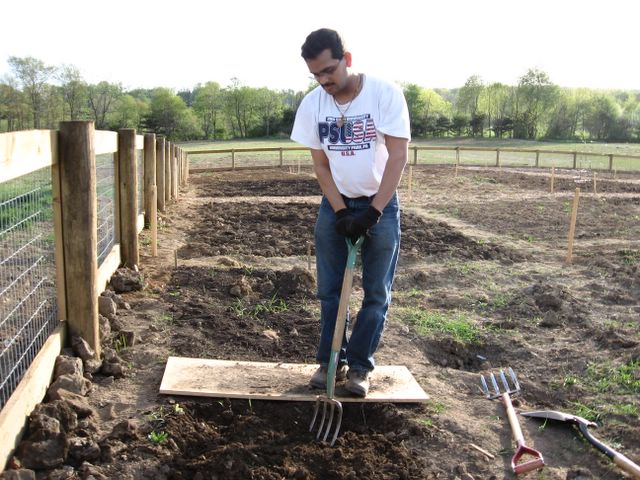
 We got our 15 ft. x 20 ft. plot towards the end of April and started digging in May. The garden has recently been expanded and more plots have been added this year. Ours is one of the new plots. Unfortunately, our plot is on a sloping barn hill which had been raised artificially by putting in rocks (The barn and the farm are now a part of Tudek Memorial Park and so is the community garden). As soon as we started digging, we found out that our first harvest would be a few tons of rocks to be taken out of our plot. In the snap on the left you can see me looking over the first bed I dug in the plot, with all the rocks that I took out lined up against the fence. We had initially planned to double dig the plots but we found that it was hard enough to go even one spade depth with all the rocks. So we decided to work the soil only a feet or so deep.
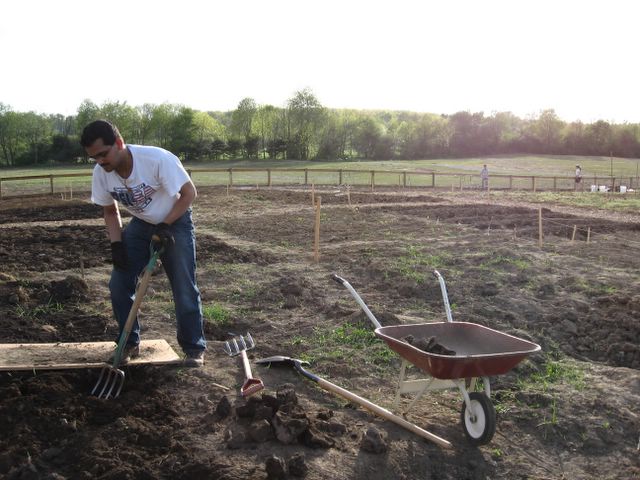 Here is another snap with all the harvested rocks. You can also see all the other plots, not planted yet, in the background. The fence in the background shows the extent of the garden. The Tudek Memorial Park ground is beyond the tree line in the background. As you can see the garden is set in very beautiful surroundings and working there is really a great pleasure in spite of all the work.
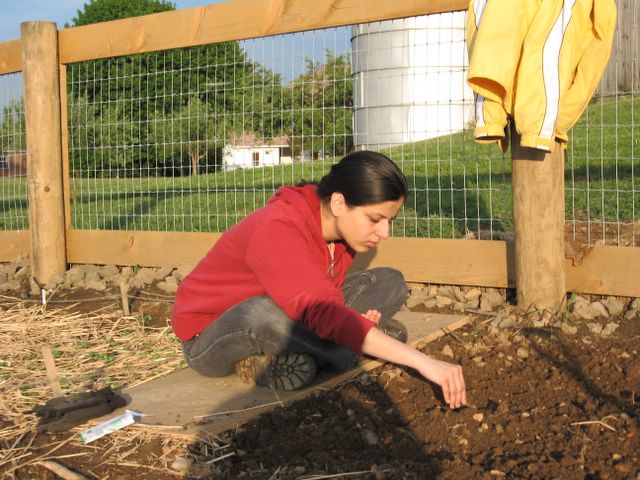 The first two beds were ready by the second week of May and we decided to plant beet, white radish, red radish and spring onions in the two beds. Following the biointensive planting technique, we planted the seeds in a hexagonal close packed pattern. Here is a snap of Sampada planting the first seeds in our garden.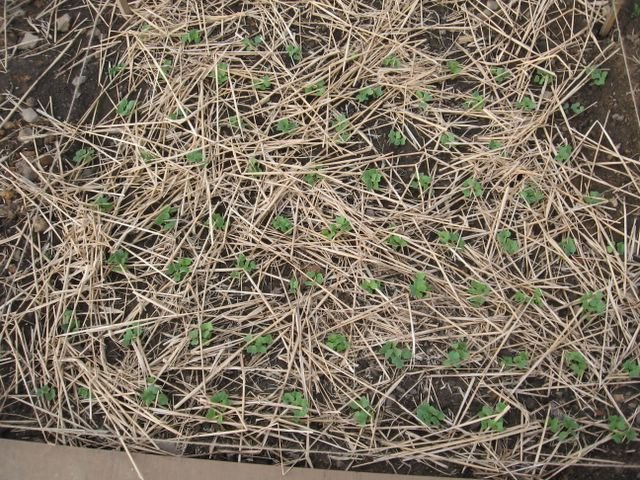
In the next snap you can see the tiny red radish saplings coming out. If you look closely (click on the image to enlarge it) you can also discern the hexagonal close packed pattern marked by the tiny green dots that are the saplings. The logic behind doing this is that the plants as they grow up create a natural cover and prevent weeds from growing in between them by blocking the sunlight. This also reduces moisture loss from the soil and conserves water. However for this to succeed there should be enough nutrients in the soil and the soil should be worked well using the double digging technique. Since we hadn't double dug the beds we decided to plant the seeds a little bit further apart than recommended to reduce the density.
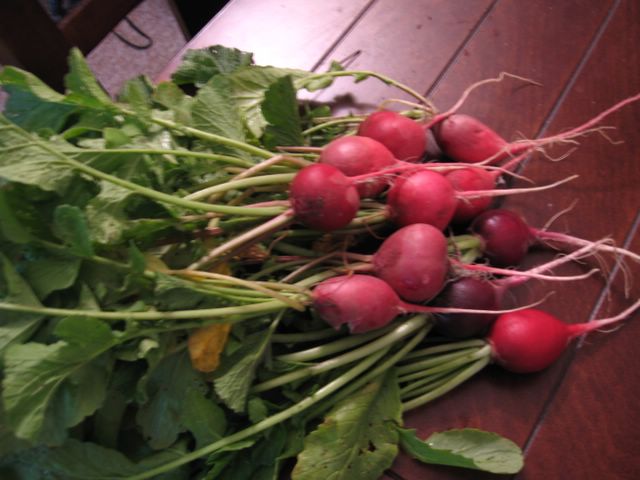 The beet and radish saplings popped out of the soil within a week or so and in two weeks they were a good six or eight inches tall. That's when we made our first big mistake. While planting them, we had planted two or three seeds at each point to ensure that we have enough plants. At almost all the points all of these seeds germinated and we had two or three saplings standing at each point. In order to get a good harvest, what we should have done is thin these out to one sapling at each point. But we were squeamish about pulling the tiny little plants out of the soil and didn't thin the beds enough. The result was that we got all of them competing for water and nutrients and very few of them growing into nice big round radishes or beets. The radishes in the snap were infact our first harvest. We got a good harvest of beets as well. None for the white radishes though.
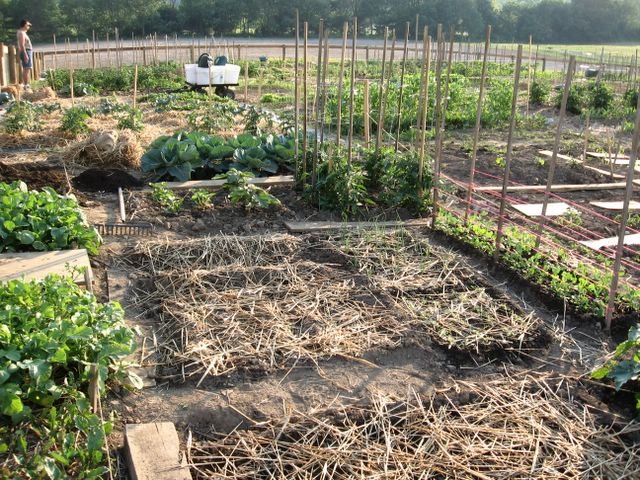 Anyway! By mid June we had utilized our plot fully and there was no more room to plant. All we had to do after that was to weed, water and wait for the harvest. Here is a picture of how our plot looked after we finished planting everything. You can see the tomatoes all staked nicely on the right. The cabbages behind them and two rows of peas on the right, in front of the tomatoes. We had also harvested the radishes by mid June and planted two more rows of peas, some chard, corn and cucumbers in their place. The straw mulch is provided by the community garden... one of the many amenities they provide for amateur gardeners like us.
Well, that was that... the first half of the story. Since mid June our main task has been to take care of what we have planted and enjoy the bounty as it comes. There are some interesting anecdotes that I would like to narrate separately. In the meanwhile you can enjoy a photo album of the garden with a lot more photos of the garden here. This year the community gardening project was featured in the local newspapers. You can find the article here. It does a good job in outlining the growth of community gardening in the US and features interviews with fellow gardeners and the coordinator/manager of our garden - Joe Banks.
Hope you enjoy the photos. Come back for more about my gardening experience in a few days.
Technorati Tags: gardening, community garden